Best Walking Aids for Arthritis: How to Choose the Right Support for You
If you have arthritis and you've been told you need a walking aid, the conversation usually ends there. You get a prescription or a referral, you collect a grey aluminium stick, and you're sent home.
What nobody tends to tell you is that the wrong walking aid, used with arthritic hands, can cause as much discomfort as it prevents. A hard, narrow handle that presses into inflamed joints. A grip that requires sustained tension to hold. A cuff that tightens around swollen forearm tissue. All of it adds up, and all of it is avoidable if you know what to look for.
This is the guide to choosing a walking aid when arthritis is part of the picture.

What Type of Walking Aid Is Right for Arthritis?
The answer depends on which joints are most affected and how much support you need.
Walking stick. For most people with arthritis that primarily affects one hip, knee, or ankle, a single walking stick is usually the starting point. It provides a third point of contact with the ground, reduces load through the affected joint, and helps stabilise your gait. If your hands and wrists are significantly affected, the handle choice becomes the most important decision you'll make.
Forearm crutches. If your arthritis affects both sides, or if you need more substantial support through weight-bearing joints, forearm crutches distribute load more widely than a single stick. They take weight through the forearm rather than the hand alone, which can actually be easier for people with significant hand and wrist involvement. The trade-off is that they require more coordination and energy than a stick.
Ergonomic or offset canes. These are designed specifically to reduce the load on the wrist during use, which makes them worth considering if wrist pain is a significant feature of your arthritis. The handle sits slightly in front of the shaft rather than directly on top, which puts the wrist in a more neutral position and reduces the torsion that standard handles create.
Not sure which type suits you best? Our mobility aid quiz gives a personalised recommendation based on your specific needs.

The Handle Is the Make or Break Decision for Arthritic Hands
This is where most standard walking aids fail people with arthritis, and it's worth spending time on.
Arthritis in the hands and wrists means joints that are often inflamed, sometimes swollen, frequently stiff in the morning and sore after sustained activity. A walking aid handle is in contact with those joints for the entire time you're on your feet. If that handle is hard, narrow, or poorly shaped, it will cause pain.
What to avoid. Traditional crook handles are the worst option for arthritic hands. The narrow curved shape means your grip has to maintain constant tension, pressure concentrates at a single point across the palm, and there's no cushioning to absorb the impact of each step. After even a short walk, this translates to soreness and swelling in the hand that may last hours.
Standard T-bar handles are better in terms of weight distribution, but they're typically hard, unpadded, and offer no ergonomic shaping to guide the hand into a comfortable position. For mild arthritis, they're manageable. For moderate or severe hand involvement, they become limiting.
What works. An ergonomic handle with cushioned padding addresses both problems at once. The moulded shape guides your hand into the correct grip position without requiring you to actively maintain it, which reduces the sustained muscular tension that exacerbates arthritis pain. The cushioned padding distributes pressure across the full surface of the palm, eliminates the point loading that causes localised soreness, and absorbs the repetitive impact that travels up through the stick with every step.
This is not a minor comfort improvement. For people with arthritic hands, the difference between a padded ergonomic handle and a hard standard one is the difference between a walking aid you can use for a full day and one you put down after an hour.
All Cool Crutches walking sticks and crutches are designed with this in mind. Browse the full walking stick range or crutches range to find the right fit.
Getting the Height Right When Arthritis Affects Your Posture
Arthritis frequently affects posture, particularly in the spine, hips, and shoulders, and this interacts with walking aid height in ways that most guides don't address.
The standard rule still applies: the handle should sit at wrist height with your arm relaxed at your side, giving a 15 to 20 degree bend at the elbow. But if arthritis has caused any reduction in your height over time, or if stiffness means you're not standing as upright as you once did, you need to measure in your typical standing posture, not an artificially upright one.
Using a stick that's calibrated for ideal posture when your actual posture is different will create tension through the shoulder and upper back on every use. It's worth measuring honestly. Our walking stick height guide covers this in detail.

The Right Ferrule Matters More Than You Might Think
When you have arthritis, falls are not just painful, they can cause serious setbacks. A worn ferrule on wet or smooth flooring is one of the most preventable fall risks for walking aid users, and it's one of the most commonly ignored.
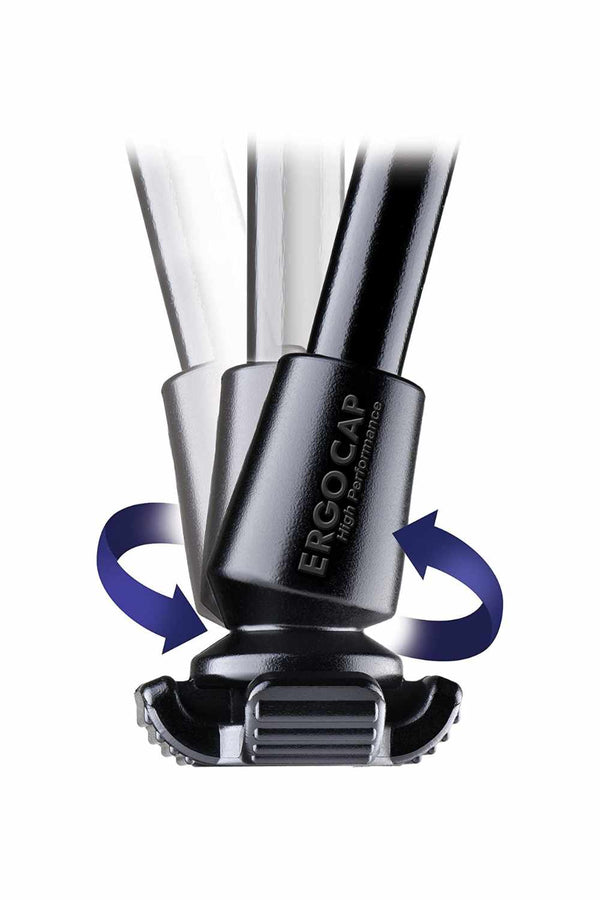
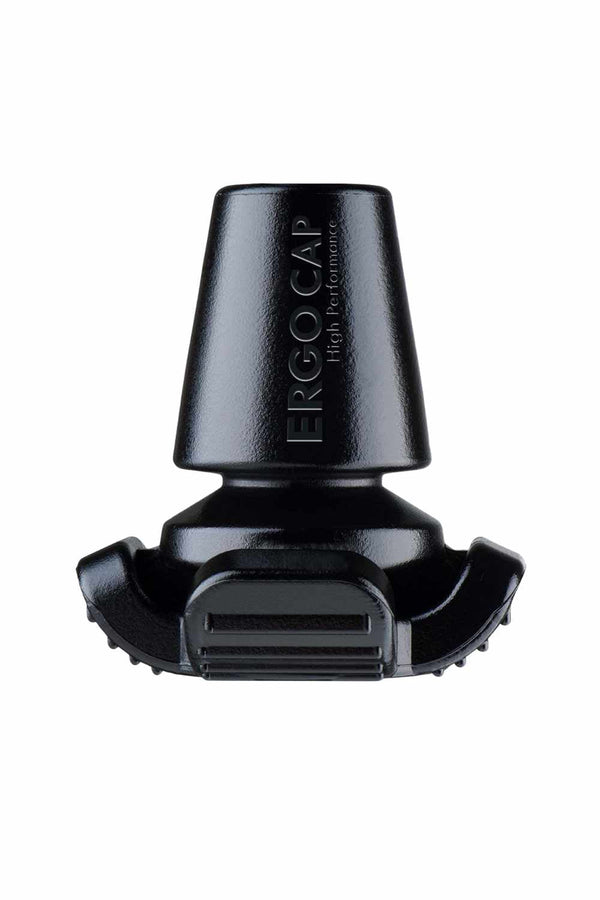
Check your ferrule regularly. If the tread pattern is worn, replace it before it's gone entirely. High performance reinforced ferrules offer significantly better grip than standard ferrules on wet surfaces and are worth considering for daily use in variable weather conditions.
For anyone with arthritis affecting their lower limbs, a good ferrule is part of fall prevention, not a cosmetic detail.

Accessories That Make a Real Difference for Arthritis
Soft neoprene handle grips. If your existing walking stick has a hard handle, adding a neoprene grip immediately improves cushioning and reduces the sustained pressure on arthritic joints. It won't fix a poorly shaped handle, but it meaningfully improves a decent one.
Walking stick wrist strap. For people with reduced grip strength due to hand arthritis, a wrist strap means you don't have to rely entirely on grip to keep hold of your stick. It sits around your wrist and retains the stick if your grip gives way, which reduces both the fall risk and the anxiety about dropping it.
Extra wide forearm cuff for crutch users. If you use forearm crutches and have swelling or tenderness around the forearm, a wider cuff distributes pressure across a larger surface area and avoids the discomfort that a standard cuff can cause against inflamed tissue.
A Note on Using the Correct Side
For arthritis affecting one hip or knee primarily, the stick should go in the opposite hand to the most affected side. So if your right knee is the problem, the stick goes in your left hand. This offloads the affected joint and creates a more balanced gait.
For bilateral arthritis, the most affected or least reliable side is usually the guide for which hand takes the stick, though a physiotherapy assessment will give you the most accurate answer for your specific presentation.
If you enjoyed this, you might also like: