How to Avoid Falls With a Walking Aid
A walking aid is supposed to reduce the risk of falls. When it's fitted correctly, maintained properly, and used with good technique, it does exactly that. When it isn't, it can become a hazard in its own right.
Falls are serious regardless of age or condition, and the fear of falling is often as limiting as a fall itself. This guide covers everything that actually makes a difference.
The most common reason walking aids cause falls...
The ferrule.
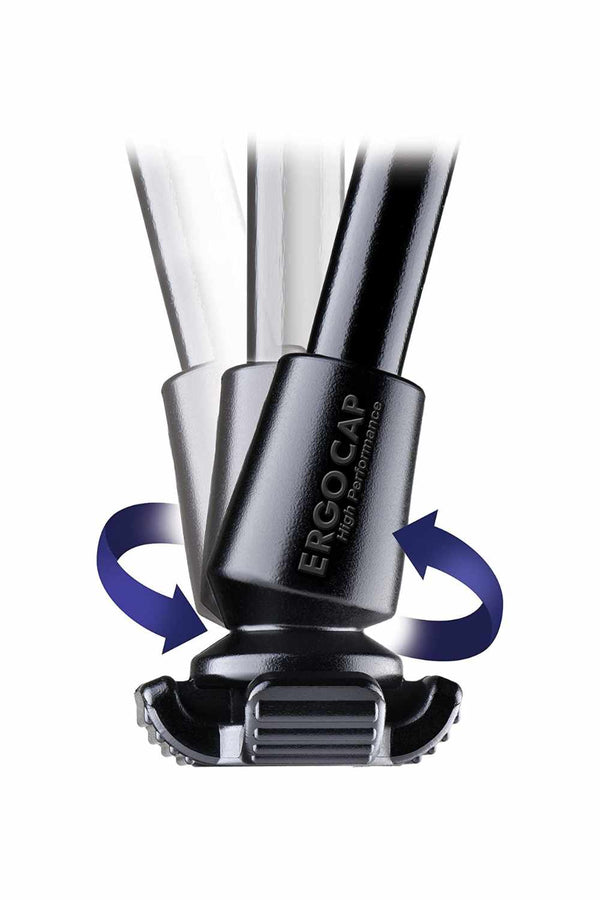
The ferrule is the rubber tip at the bottom of a walking stick or crutch. It's the only point of contact between your aid and the ground, and it's doing an enormous amount of work. It grips the floor, absorbs impact, and keeps the tip from sliding.
A worn ferrule is one of the most common causes of preventable falls. The problem is that ferrules wear gradually, which means people often don't notice until the grip is significantly reduced or the tip has worn through entirely. By that point, the aid can slide on hard floors, wet surfaces, and anything slightly uneven.
The signs of a worn ferrule are a smooth or shiny base, visible wear patterns, or a ferrule that has gone flat in the centre. If you can see any of those, replace it before the next time you go out.
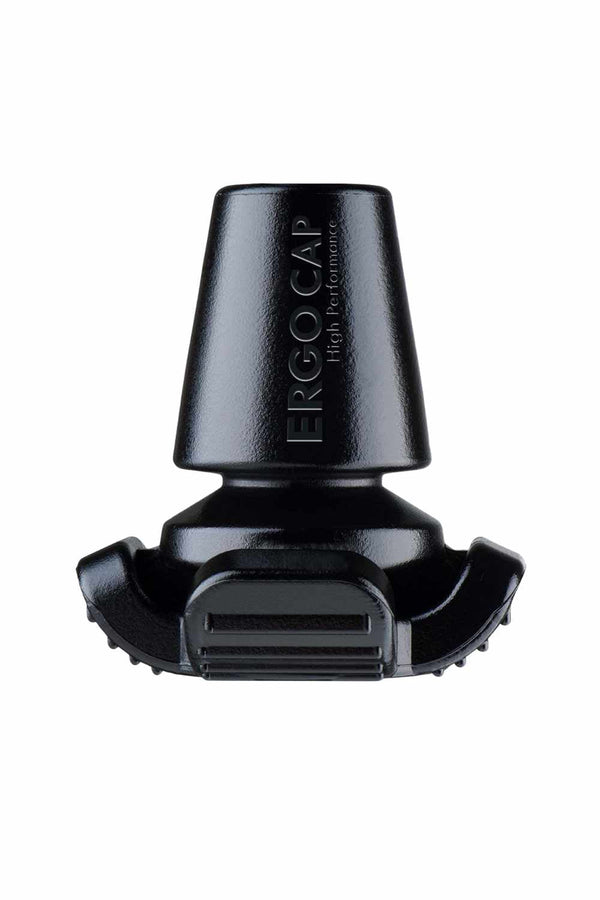
Our ferrule range includes standard, high-performance, and Ultralite options. If you use your walking aid every day, particularly on hard floors or outdoors, the Ultralite High Performance Ferrules offer significantly better grip and durability than a standard rubber tip.

Height and fall risk
An incorrectly set walking aid is a fall risk in itself.
Too short: you compensate by leaning forward and bending the wrist downward to reach the handle. This shifts your weight off-balance and puts you at higher risk of pitching forward.
Too tall: your shoulder rises with every step, your elbow is straightened beyond a comfortable angle, and the aid stops functioning as a stable support.
The correct height for a walking stick puts the handle at wrist crease height when you're standing with your arm relaxed at your side. For crutches, the handle should be at the same point and the cuff should sit a few centimetres below the elbow, not on it. Check our how to use videos if you want to see this demonstrated.
Even if you set your aid up correctly when you first got it, it's worth rechecking. Posture changes. Footwear changes the height equation more than people realise. If you've recently changed the shoes you wear most often, recheck your height setting.

Technique and gait
The way you use your walking aid matters as much as the aid itself.
For a walking stick, the stick should move forward at the same time as the leg on the opposite side. This is the natural counterbalance pattern and it's the most stable way to walk. Many people unconsciously move the stick forward with the same-side leg instead, which disrupts balance rather than supporting it.
For crutches, the technique depends on how much weight you're bearing. Our weight bearing guide covers this in detail, but the key principle is never to rest body weight through the top of the crutch into the armpit. All weight should go through the hands and handles.
For both, look ahead rather than down. Looking at your feet changes your posture and moves your centre of gravity forward.
Surfaces and environments
Certain surfaces carry higher fall risk and are worth thinking about in advance rather than encountering unprepared.
Wet floors are the most obvious. A good ferrule helps significantly, but slowing down and widening your stance gives you more time and more stability if the grip is even slightly uncertain. Wet leaves, wet pavements, and polished floors in shops or hospitals are all higher risk than they look.
Stairs require thought about technique. Going up: lead with the stronger leg and bring the aid and weaker leg up second. Going down: lead with the weaker leg and the aid, bring the stronger leg down second. The phrase often used is "up with the good, down with the bad." If you're on crutches and managing stairs, hold the handrail with one hand and tuck both crutches under the opposite arm.
Uneven surfaces, cobblestones, gravel paths, grass, deserve more attention than flat indoor floors. Slow down, plant the aid deliberately rather than in one fluid motion, and don't assume grip will be consistent.

One you might not have thought of: night-time bathroom trips
Waking up in the night to use the bathroom is one of the most common and least talked about fall risks for walking aid users. An uneven floor, something left in the path, a trailing blanket or bedsheet, and not being fully awake yet is a combination that catches people out far more often than any daytime hazard.
The simplest fix is light. Enough to see where you're going, without turning on a full room light that wakes everyone else up.
Our clip-on torch attaches directly to your stick and is worth turning on before you stand up, while you're still in bed and steady. You can see the floor, your route is clear, and nobody else in the house needs to know you were ever up.
When the fear of falling limits more than falling would
Fear of falling is a recognised and significant issue for many people who use mobility aids. It often leads to people moving less, going out less, and reducing activity in ways that actually increase fall risk over time by reducing strength and confidence.
If the fear of falling is shaping what you'll do and where you'll go, it's worth naming that directly with a GP or physio. There are specific programmes designed to address this, and they work. Avoiding activity to avoid falls tends to create a loop that's harder to break the longer it continues.
A walking aid that you actually trust, that fits correctly, that has a good ferrule and a handle you can grip comfortably, makes more difference to that confidence than people usually anticipate. If you're currently using an NHS-issued aid that doesn't feel stable or right for you, our guide to what to do when NHS provision isn't enough is a good starting point.
If you enjoyed this, you might also like:
- Crutch accessories: the complete guide to making your crutches more comfortable
- Folding walking sticks: the complete guide to choosing, using and trusting one
- How to use crutches for weight bearing: the complete guide to safe recovery